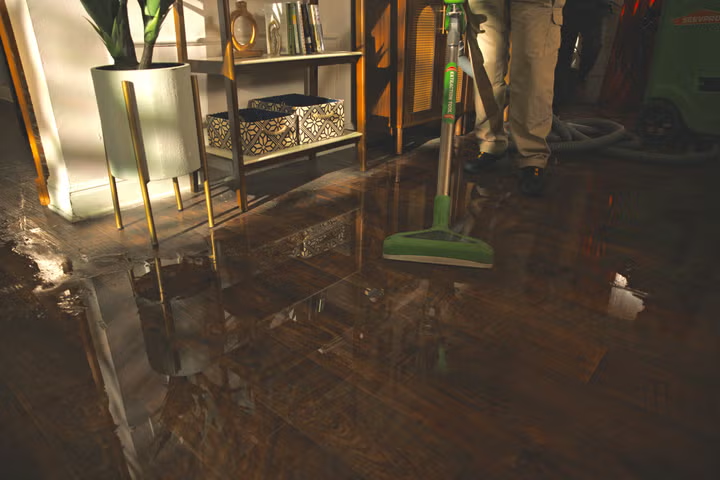
Drive fifteen minutes in any direction from our territory's center and the buildings change completely. Colonialtown and Thornton Park have 1920s bungalows with plaster walls, original hardwood floors, and downtown-adjacent condo conversions. Union Park, Chickasaw, and Lake Underhill are full of 1960s-to-80s concrete block homes running on their original cast-iron drain lines. Waterford Lakes and Vista Lakes were built out in the 90s and 2000s with two-story wood-frame construction and second-floor laundry rooms. Avalon Park is a 2000s master-planned community with HOA architectural standards. Then there's the UCF corridor, thousands of student housing units and investor-owned rentals, and Central Florida Research Park, where defense and simulation firms run offices and labs that can't afford a week of downtime. SERVPRO of University, SE Orlando restores water, fire, mold, storm, sewage, and biohazard damage across all of it, and each part of the map fails in its own way.
Who owns SERVPRO of University, SE Orlando?
Susan and Vern Boatman own and operate this franchise. They have owned SERVPRO franchises in Central Florida for more than 15 years, which means the people directing your loss have worked through this region's specific problems many times over: the summer thunderstorm pattern that dumps rain nearly every afternoon from June through September, the hurricane seasons that periodically test every roof in Orange County, and the slab leaks, drain backups, and AC condensation failures that fill the calendar between storms. Their crews hold IICRC certifications, the industry standard for water damage restoration, applied structural drying, fire restoration, and mold remediation, and the office answers its own phone with a live person 24 hours a day, because pipes do not fail on a business schedule.
Where we work
SERVPRO of University, SE Orlando serves east Orlando and the surrounding communities of Orange and Seminole counties, including the University of Central Florida area, Alafaya, Waterford Lakes, Avalon Park, Union Park, Vista East, Vista Lakes, Lake Underhill, South Semoran, Colonialtown, Thornton Park, Chickasaw, Econlockhatchee, and Central Florida Research Park, along with Goldenrod, Azalea Park, Belle Isle, Casselberry, Winter Springs, and neighborhoods across the city of Orlando. If your property sits anywhere along the SR 408 or SR 417 corridors east of downtown, from the shores of Lake Underhill out past the Econ River, there is a strong chance our crews have already worked on your street. Response begins from inside the territory, which is why our arrival times are measured against Orlando traffic, not against a dispatch map drawn in another city.
How does each part of east Orlando fail differently?
In the older neighborhoods along Lake Underhill Road and through Union Park and Chickasaw, the recurring problems are cast-iron drain stacks that have corroded from the inside for sixty years and copper supply lines running under the slab. A cast-iron backup pushes Category 3 water, sewage, up through tubs and floor drains. A slab leak can run for weeks before anyone notices the water bill, saturating the slab and wicking up into block walls.
In Waterford Lakes, Avalon Park, and Vista East, the houses are newer but taller. Water heaters in garages, washing machines on second floors, and PVC supply lines to refrigerator ice makers fail and send water down through floor systems, soaking subfloor, drywall ceilings, and insulation on the way. A second-floor supply line failure in a two-story home routinely damages three or four rooms across two levels.
Around UCF and along Alafaya Trail, the dominant problem is delay. Student tenants don't always report a slow leak under a kitchen sink, and a property manager may not see the unit until lease turnover. By then the cabinet base is rotted, the drywall behind it is colonized with mold, and the remediation now needs containment, negative air pressure, and HEPA air scrubbers instead of a simple dry-out.
In Colonialtown and Thornton Park, the materials themselves demand different work. Plaster holds moisture differently than drywall. Original oak flooring can often be saved with the right drying setup and often cannot be replaced with anything matching if it's demolished carelessly. We dry these houses to preserve what makes them worth owning.
And across the Econlockhatchee basin on the territory's east side, the ground is low and wet. When Hurricane Ian stalled over Central Florida in 2022, the Econ pushed water into homes that had never flooded before. Rising exterior water is generally excluded from standard homeowner policies, it falls under NFIP or private flood coverage, and knowing which policy applies to which water shapes how a claim gets documented from the first hour.
Three losses that explain how we work
A leak nobody reported, found three days before move-in. A property manager for a four-bedroom rental off Alafaya Trail called us in late July. The outgoing tenants were gone, the new leases started August 1, and the turnover crew had found a kitchen cabinet base black with growth and drywall soft to the touch. A supply line to the dishwasher had been misting into the cabinet for months, and nobody living there had thought it was their problem to report. We treated it as two jobs running at once. The remediation itself was standard discipline: containment sealing the kitchen off from the rest of the unit, negative air pressure with HEPA filtration, removal of the cabinet run and two feet of drywall, antimicrobial treatment, and drying verified by meters. The schedule was the real assignment. Our crew worked it in three days, coordinated the plumber and the cabinet installer inside our timeline, and handed the manager a documentation package the owner's carrier accepted without a site visit. The new tenants moved in on August 1 and never knew. That is what restoration looks like in a rental market that lives and dies by the academic calendar.
The Saturday morning the shower backed up in a 1972 block home. A Chickasaw-area homeowner called us when wastewater came up through the hall bathroom tub while the washing machine drained. That combination is the classic signature of a failing cast-iron main under the slab, and this house, like most of its neighbors, still ran on its original line. Sewage is Category 3 water, the industry term for grossly contaminated water that carries bacteria and pathogens, and the response is different in kind from a clean water loss. Our crew extracted the standing water, removed the bathroom's affected baseboard and lower drywall along with the hallway carpet and pad, cleaned and treated every touched surface with hospital grade antimicrobials, and dried the structure to documented standards. Just as important was what we told the family: the backup would repeat until the line was addressed, so our scope and photos were written to support both the immediate claim and the plumbing conversation that had to follow. Nobody sold them anything they did not need. The bathroom was rebuilt by our own construction team two weeks later.
The office that flooded at 7 p.m. on a Friday. A facilities contact for a simulation firm in Central Florida Research Park reached us Monday at 6:40 a.m. A chilled water line fitting above the ceiling grid had let go sometime Friday evening, and the leak ran all weekend. Ceiling tiles were down across two thousand square feet, carpet squished underfoot, and the humidity inside the suite had been climbing for sixty hours around equipment worth more than the building finishes. Our first moves were about air, not water: commercial dehumidification sized to the space to pull the humidity down, then extraction and a moisture map of walls, plenum, and flooring. The suite had badge access rules and areas we could not photograph, so scopes were written around those constraints and every technician entered with an escort. Drying ran overnight and through the following weekend with daily readings shared to the facility manager. The firm never lost a full working day, and the documentation file settled a three-way conversation among the tenant, the landlord, and two carriers without an argument. Losses like this one are why we treat Monday morning as the busiest hour in the commercial week.
What we actually do on a loss
Water damage restoration is the core of the business. Crews arrive with truck-mounted extraction units that pull standing water far faster than portable equipment, then map the moisture with infrared cameras and moisture meters, because water travels under baseboards and inside wall cavities where it can't be seen. Drying equipment is placed based on those readings, and readings are retaken daily until the structure hits documented dry standards. Guessing is how you end up with mold behind a wall six months later.
What does structurally dry actually mean? Applied structural drying is the science of removing moisture from building materials in place, using airflow, dehumidification, and heat in measured balance, instead of demolishing everything wet. Every material has a dry standard, the moisture content it held before the loss, established by reading unaffected materials of the same type elsewhere in the building. A wall is dry when the meter says it matches that standard, not when it feels dry to a hand or looks dry to an eye. That definition matters because the gap between looks dry and is dry is exactly where mold problems and failed claims are born.
Fire damage restoration starts with securing the structure, board-up and roof tarping, then moves to soot and smoke removal. Soot is acidic and keeps etching metal, glass, and finishes for days after the fire is out, so the sequence and speed of cleaning matter. Smoke odor removal is treated as its own scope, not an afterthought.
Mold remediation follows containment protocols: the affected area is isolated with physical barriers, HEPA air scrubbers run negative pressure so spores don't migrate to clean parts of the building, contaminated materials are removed and bagged inside containment, and remaining surfaces are cleaned and dried.
Storm response covers roof tarping, board-up, water extraction, and structural drying after wind and rain events. This franchise is part of the SERVPRO Large Loss Division, so when a hurricane produces damage across an entire apartment complex, a school, or a commercial campus, additional crews and equipment can be mobilized through the SERVPRO system rather than being limited to one office's resources.
Sewage cleanup is handled under Category 3 protocols, full protective equipment, removal of porous materials that contacted contaminated water, and antimicrobial treatment, because sewage carries pathogens that a shop vacuum and bleach do not address.
Biohazard cleaning covers trauma scenes, unattended deaths, and other situations requiring OSHA bloodborne pathogen protocols. These jobs are done discreetly, in unmarked fashion when families request it, with the same documentation discipline as any other loss.
Contents work rounds out mitigation: full pack-out with itemized inventory, off-site cleaning and storage, facility cleaning for commercial clients, and document freeze-drying for wet papers, files, and books that can't simply be air-dried.
Reconstruction means we don't hand you off when the drying equipment leaves. The same company that demolished the wet drywall rebuilds it, drywall, paint, flooring, trim, cabinetry, so there's one scope, one schedule, and no gap between the mitigation contractor and a builder who has never seen the loss.
How the insurance side gets handled
Most of our work runs through insurance claims, and the difference between a smooth claim and a disputed one is usually documentation. We photograph conditions before work starts, record moisture readings for every affected material, log equipment placement and daily drying progress, and itemize contents. That file goes to your adjuster in the format carriers expect. We coordinate directly with the Florida carriers our customers actually hold policies with: State Farm, Allstate, Citizens, USAA, Progressive, Farmers, and others, which means fewer phone calls you have to make and fewer scope disagreements at the end of the job. We work for the property owner, not the carrier, but we speak the adjuster's language.
The first hour, before our truck arrives
What you do in the first sixty minutes changes the size of the loss, so here is the honest checklist. Stop the water if you can reach the source: the valve behind the toilet, under the sink, at the water heater, or the main shutoff, which in most east Orlando homes sits near the front hose bib or at the meter box by the street. Kill the breakers to any room where water is near outlets or fixtures. Move what is movable, furniture legs out of wet carpet, electronics up off the floor, photographs and documents to a dry room. If you rent, call your landlord or property manager right after you call us, not instead of calling us, because mitigation should not wait on a callback. Then leave the structure alone. Do not pull up flooring, do not cut drywall, and do not aim a box fan at a soaked wall, because the claim needs the damage documented as it happened, and amateur drying mostly relocates moisture instead of removing it. Photograph what you see, note the time, and keep the pipe, hose, or fitting that failed if a plumber removes it. Your adjuster may want it, and so may we.
Questions east Orlando property owners ask us
Does homeowners insurance cover flood damage in Orlando?
Generally not, if the water rose from outside, from a retention pond, the Econ, or street flooding. Standard homeowner policies typically exclude rising exterior water; that's what NFIP or private flood policies cover. Water from a burst pipe, roof leak, or appliance failure inside the home is usually a different story. We document the water's source and path carefully because that distinction decides which policy responds.
Do I need to move out during water damage restoration?
Often no. For losses confined to part of a home, drying equipment can run while you stay. Sewage losses, large mold remediation with containment, and major fire damage are more likely to require temporary relocation. It depends on scope, and we'll tell you honestly.
My tenant near UCF didn't report a leak for weeks. How bad is it?
Long-running leaks usually mean mold, not just water. Expect containment, HEPA filtration, and removal of affected drywall and cabinetry rather than a quick dry-out. We work with property managers on lease-turnover deadlines and document everything for both the claim and the tenant file.
Can you rebuild after the demolition, or do I need a separate contractor?
We rebuild. One team handles mitigation through reconstruction, including matching finishes and meeting HOA standards in communities like Avalon Park and Waterford Lakes.
Is the black stuff around my AC vents mold?
In Florida humidity, quite possibly, air handlers and closets are common growth points. Surface discoloration at vents sometimes indicates a larger problem on coils or inside ducts. An inspection with moisture readings tells you whether you need mold remediation or a cleaning.
What should I do before your crew arrives after a pipe bursts?
Shut off the water at the main if you can, kill electricity to affected areas if water is near outlets, and move what's movable. Don't pull up flooring or tear out drywall, leave the structure as-is so the damage can be documented for your claim.
Who calls you after a loss in a rental, the tenant or the landlord?
Either, and the sooner the better. Tenants usually see the damage first; owners and managers hold the authority to approve work. We take the first call from whoever finds the problem, start documenting immediately, and get owner approval in parallel, because water does not wait for an org chart.
Can the wood floors and plaster in an older Orlando home be saved?
Very often, yes, if the response is fast. Original hardwood that has cupped can frequently be dried back flat, and plaster can usually be dried in place rather than demolished. We make those calls with moisture readings and say plainly what is savable and what is not.
How do you keep mold from coming back after remediation?
By fixing the water first. Mold is a symptom; moisture is the cause. Every remediation we perform includes finding and correcting the source, drying verified by instruments, and a final condition documented in writing, because removal without source correction is a rescheduled failure.
What is an Emergency Ready Profile?
A free plan we build for businesses and associations that documents shutoff locations, utility details, priority contacts, and access notes before anything goes wrong. When a loss happens at 2 a.m., the on-call manager opens a checklist instead of guessing where the main valve is.
One phone call, any hour
When you call SERVPRO of University, SE Orlando, a person answers, at 2 p.m. on a Tuesday or 3 a.m. during a tropical storm. That call starts the process: questions about the source and spread of the damage, dispatch of an IICRC-certified crew, and documentation from the first photograph to the final walkthrough. From a slab leak in Union Park to a flooded office in Research Park, the goal is the same every time, to make it "Like it never even happened." Fifteen years of Central Florida losses have taught this team one durable lesson: the properties that recover fastest are the ones where the first call went to a company that documents everything, explains everything, and answers its own phone. That is the company Susan and Vern Boatman built here, and it is the standard every technician on every truck is held to, on every street from Colonialtown to the Econ.